Articles & Tutorials
Guides, tutorials, and resources for creative computation.
36 articles

Your Creative Business on Autopilot: What That Actually Means in 2026
What 'on autopilot' actually looks like for a one-person creative practice now that Claude Code has scheduled cloud routines. The shape of the system, the principles that protect you, and where to start.

Claude Design, Sessions, Routines: the new shape of Claude
A tour of Anthropic's launch week — Claude Design, parallel Sessions in Claude Code, scheduled Routines, and Opus 4.7. What each is and how to use it.

Getting Started with Midjourney (2026)
A beginner's guide to Midjourney in 2026: pick the right plan, write your first prompt, use Draft Mode, and dodge the three quirks that trip everyone up.
Midjourney v7, v8, v8.1: What's Stable, What's Alpha
An honest state of the Midjourney platform. v7 is still the default. v8 and v8.1 are alpha. Here's what changed, what each version is for, and which to use right now.

From Sketch to Image: How to Turn a Drawing Into a Photograph
A rough pencil sketch can be the most expressive input you give an AI. Here's what models do with one, and how to take a photo of yours that works.

Knowing When to Stop
Finished-and-ugly beats half-done-and-pretty. The hardest skill in vibe coding is recognising when v1 is done, and putting the rest on the v2 list.

What Are Claude Code Skills (And Why They Change Everything)
Slash commands are one-shot prompts. Skills are entire folders — with scripts, assets, hooks, and memory. They turn Claude from a tool you talk to into a collaborator who knows your workflow.

Claude Learned to Work Without You
On April 8, Anthropic gave Claude Code servers of its own. Agents no longer need your laptop open, your desktop app running, or you in the room. Here's what that actually means for creatives.

The Constraints Interview
Your idea is not limited by what you can imagine. It is limited by what you can finish. Find the real shape of what is possible.

The Three Buckets
Before you build anything, figure out which kind of thing you are actually making. There are three. The one you say yes to changes everything.

Does It Look Good?
The eighty-twenty of design for people who did not train as designers. Four rules that will make almost any vibe-coded thing look considered, without needing to learn typography from scratch.

Real Content Beats Lorem Ipsum
Placeholder text is the last thing hiding the gap between a real site and a draft. Write the real words. The design will tell you whether it works.

Reverse Prompting: When Claude Asks the Questions
Most people prompt the AI. The best results come when it prompts you — structured questions with options, previews, and tradeoffs explained.

Scaling Vibe-Coded Systems: From 'It Works' to 'It Holds'
Your side project got real traction. Now what? A production-readiness checklist, an observability recipe, and a runbook for when code you didn't write catches fire.

Sora Is Shutting Down. Here's Where to Go Next.
OpenAI is closing Sora. The app goes dark on April 26, the API in September. Here's how to save your work, which models can take its place, and what changes for your workflow.
AI Video Models in 2026: Seedance 2.0 Takes the Lead
Seedance 2.0 now leads every major video benchmark — native audio, phoneme-level lipsync. Kling, Veo, and Runway still matter as specialists. The current landscape, plain.

Choosing Your Model: The Decision Tree for April 2026
You know what the models are. Now here's how to pick one — based on what you're making, not what's trending.

The Ethics Check: What to Think About Before You Generate
Disclosure, consent, likeness, training data. The conversation the rest of the AI art world is skipping — and the one that will matter most in six months.

Budget Control: Credits, Compute, and Not Getting Burned
AI coding tools charge by the token, the minute, or the month. Here's how each one works — and how to avoid the surprise bill.

Claude Code on Your Phone, Desktop, and Cloud
Start a project on your phone during a commute. Pick it up on your desktop. Hand it off to the cloud overnight. Here's how Claude Code moves with you.

Claude on Your Computer: Files, Browser, Apps, and Everything Else
Claude doesn't just write code. It opens apps, moves files, cleans up your desktop, browses the web, and fills in spreadsheets. Here's everything it can actually do on your machine.

Context Rot: The Hidden Reason Your AI Session Falls Apart
Your AI session was going well. Then it started forgetting things, repeating itself, and making weird mistakes. Here's what happened — and how to fix it in thirty seconds.
The Right AI Tool for Every Creative Task
Claude Code, Cowork, and ChatGPT each do something different. Here's which to reach for based on what you actually need to get done.

Start Here: The Vibe Coding Path
New to vibe coding? This is your roadmap — every article in the code track, in the order that makes the most sense. Start at the top, work your way down.

The Vibe Coder's Survival Guide: What to Do When It Breaks
AI builds the first 80% brilliantly. Then something breaks and you don't know why. Here's the non-developer's guide to debugging, recovering, and knowing when to ask for help.

What Happens After You Build It: Maintaining Your Vibe-Coded Projects
You built a site. It works. Now what? How to update it, fix things that break, keep it secure, and know when you need a human developer.

What Is Vibe Coding (And Why It Works)
You describe the vibe. The AI writes the code. It sounds like cheating. It is not. It is a new way of making things — and it is changing who gets to build.

The AI Creative's Toolbox: Platforms, Pipelines, and What Actually Works
The platforms, tools, and workflows that working AI creatives actually use in 2026 — not a list of everything, just what matters.

AI Image Models in 2026: Nano Banana, Flux, Midjourney — Which for What
Six models dominate AI image generation right now. Each does something different. Here's which to use, when, and why.

Cloud or Local? How to Actually Decide for Your AI Image Setup
One costs money per image. The other costs money upfront and breaks often. Here's the honest decision framework — what each path looks like, who it's for, and what nobody tells you.
The Consistency Gap: Why Your AI Character Changes Between Images
You nailed the first image. The second looks like a different person. Here's why AI models drift — and how to start fixing it.

The Legal Layer: Copyright, Commercial Rights, and Platform Rules in 2026
Can you sell it? Can someone copy it? What does Etsy actually require? The current state of AI art law — updated quarterly.

Start Here: The AI Creative Path
New to AI creative work? This is your roadmap — every article in the creative track, in the order that makes the most sense.
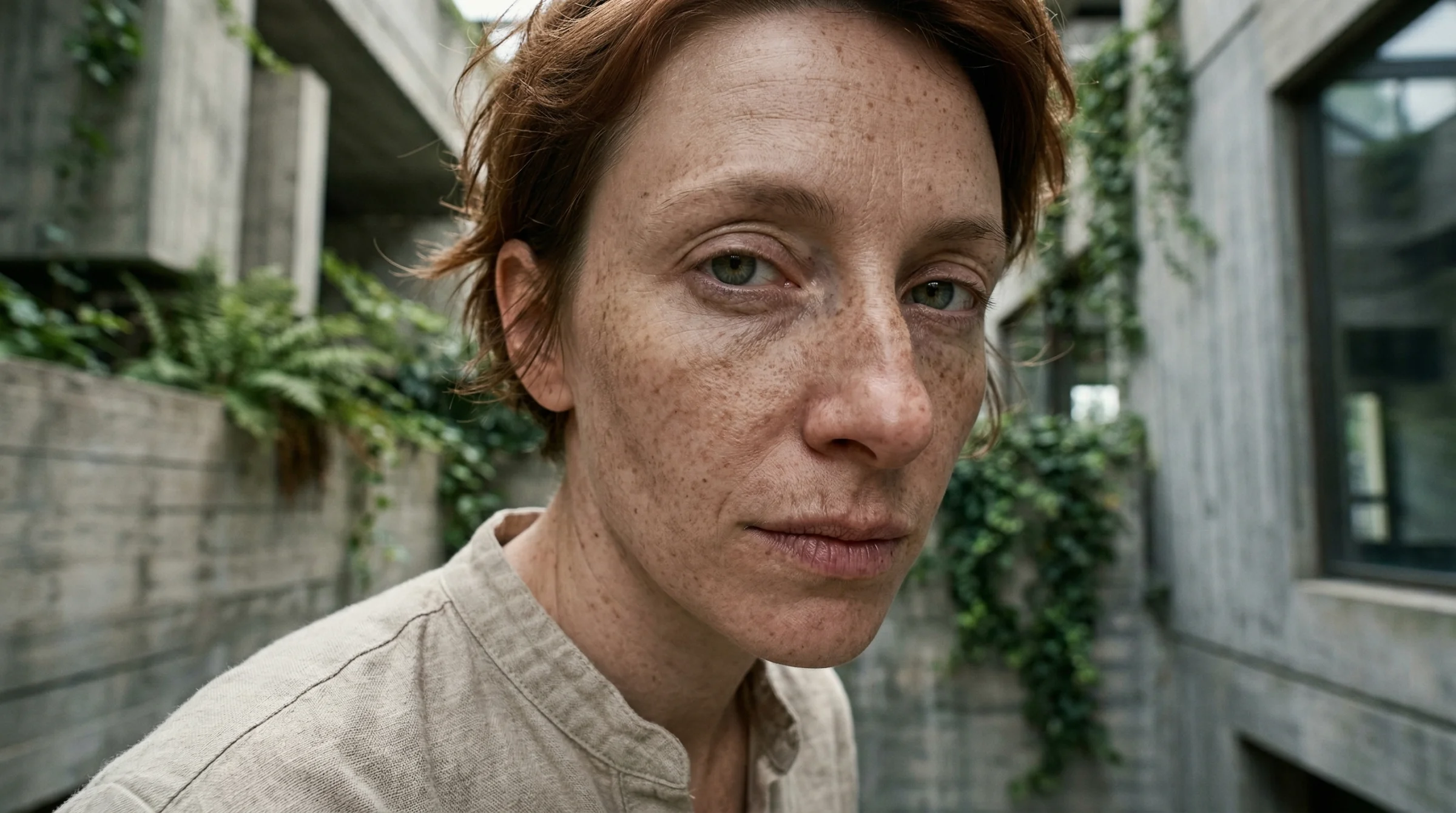
Why Your AI Images Still Look AI — And What to Fix
The image is technically correct. But something is off. Here are the five giveaways that mark an image as AI-generated — and how to eliminate each one.

Your First AI Image: What to Say and How to Say It
You don't need to learn prompt engineering. You need to describe what you see in your head. Here's how to talk to an image model and get something worth keeping.
creative · guideWelcome to Art & Algorithms
Where code becomes art and art becomes code. A new space for creative computation.